
Tajikistan: The Roof of the World
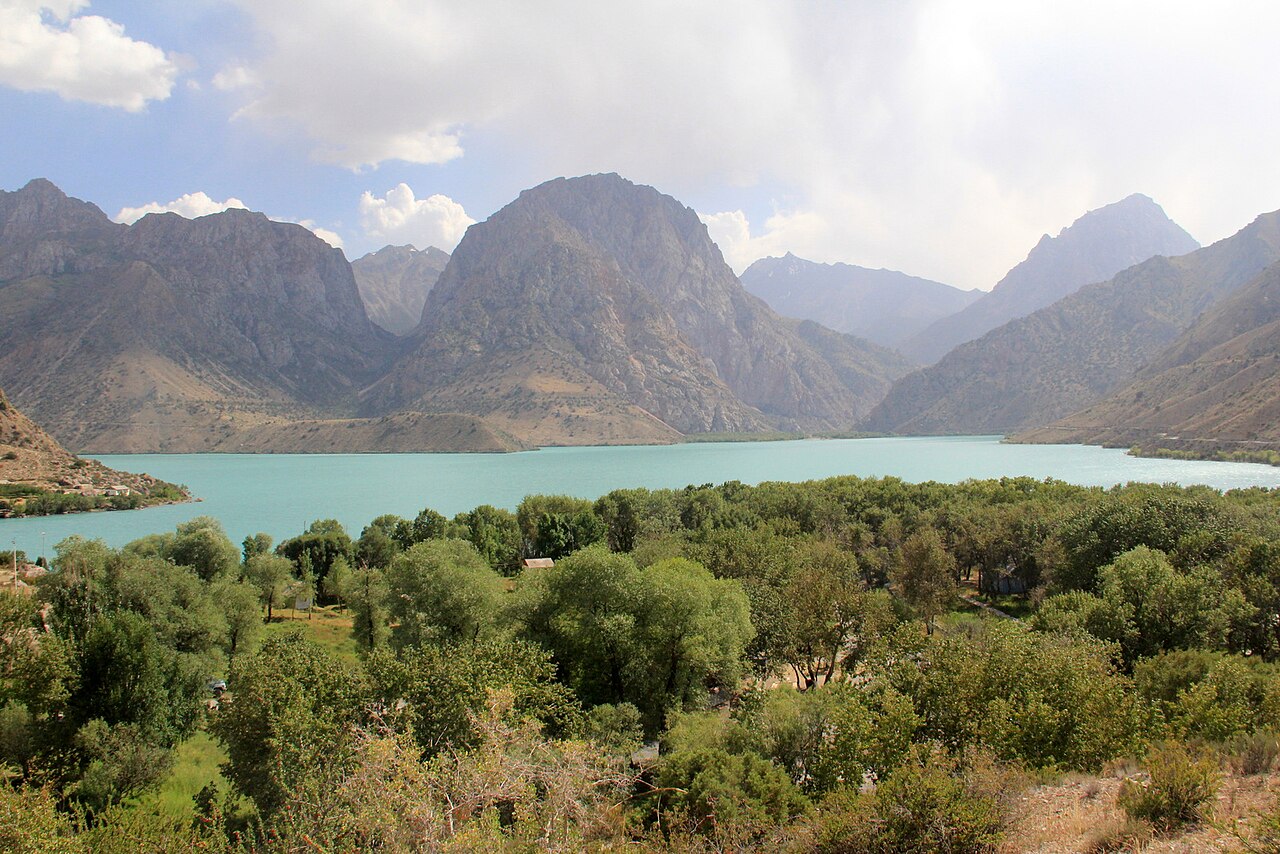
Tajikistan is a land of vertical extremes. With 93% of its territory covered by mountains, it is the highest nation in Central Asia and a place where nature still dictates the terms of life. In 2026, Tajikistan has stepped into the global spotlight as one of Lonely Planet’s "Best in Travel" destinations, specifically recognized for its wild trekking and the "infinite" hospitality of its people.
From the turquoise alpine lakes of the Fann Mountains to the legendary "Roof of the World"—the Pamir Highway—Tajikistan offers an adventure that is raw, cinematic, and profoundly authentic. Here is your factual, grounded guide to exploring this hidden gem.
1. Dushanbe: The Green Oasis
Your journey will likely begin in Dushanbe, the "City of Monday." In 2026, the capital is a fascinating blend of Soviet-era boulevards and modern Tajik ambition.
- Rudaki Park: This is the green lung of the city, home to lush gardens and the iconic Statue of Ismoil Somoni. It’s the perfect place to witness the city's relaxed pace.
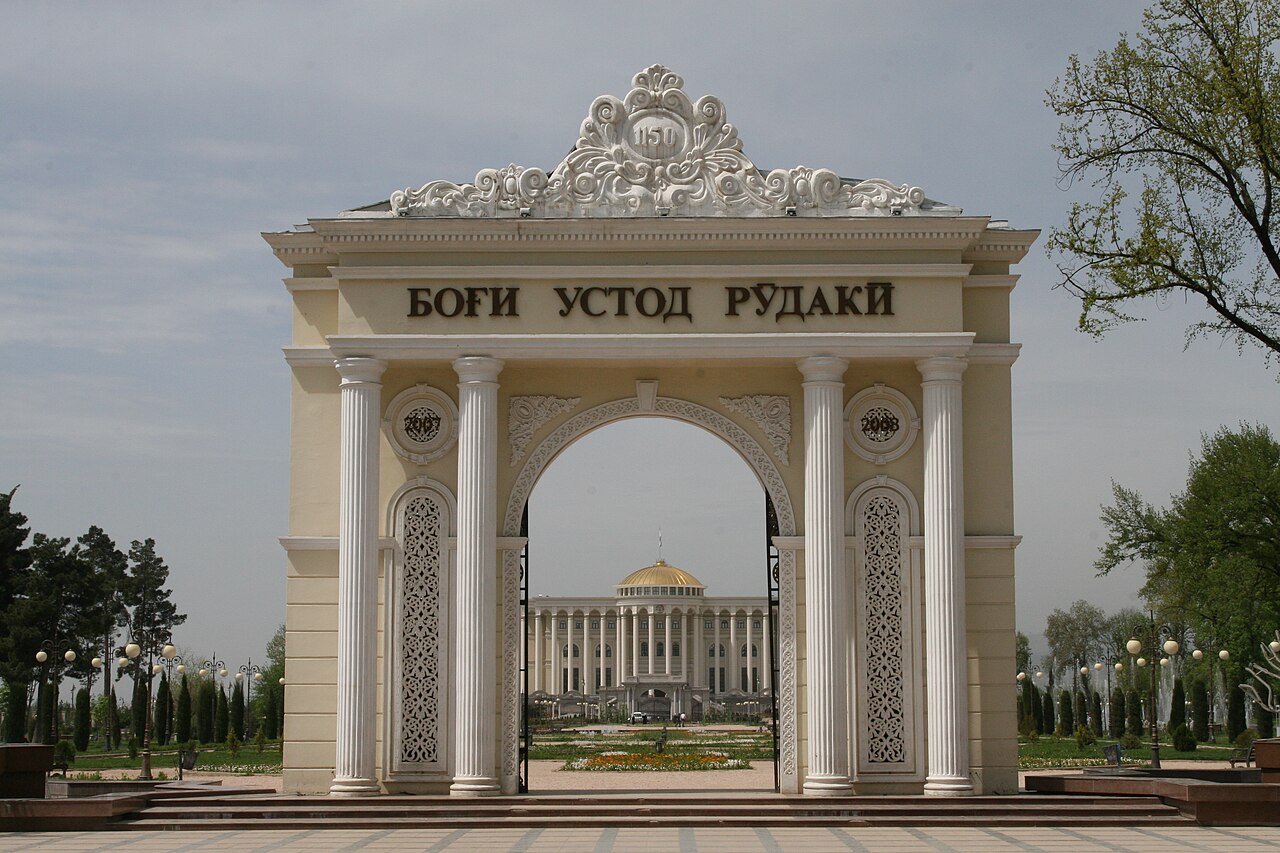
- Rudaki Park and palace in the background. Source- By Maris Teteris, CC BY 3.0
- The National Museum of Tajikistan: A modern architectural marvel where you can see the Sleeping Buddha, a 13-meter relic that highlights the country’s ancient Buddhist history.
- Navruz Palace: Originally intended to be a tea house, this building transformed into a grand palace of wood carvings, mosaics, and mirrors. It is a masterclass in modern Tajik craftsmanship.
2. The Fann Mountains: A Trekker’s Dream
Located in northwestern Tajikistan, the Fann Mountains are often cited as the most beautiful range in Central Asia due to their "psychedelic" turquoise lakes and jagged peaks.
- The Seven Lakes (Haft Kul): A string of seven lakes cascading down the Shing Valley. Each lake—from the dark blue of the first to the shimmering turquoise of the seventh—has its own legend and a nearby stone village.
- Iskanderkul: Named after Alexander the Great (Iskander), this glacial lake is the "jewel of the Fanns." At 2,195 meters, it is surrounded by high peaks and features a nearby waterfall known as the "Niagara of Tajikistan."
- Alauddin Lakes: If you seek true isolation, trekking to these crystalline basins offers world-class wild camping under the clearest Milky Way you will ever see.
3. The Digital Lifeline: Why You Need an eSIM
While Tajikistan is the place to "unplug" from stress, navigating its rugged geography in 2026 requires a high degree of digital preparation.
The Logistics Challenge
- Real-Time Navigation: Outside of Dushanbe, road signs can be sparse. Finding the right mountain pass or the specific "Post Box" trailhead in the Fanns requires live GPS.
- Safety in the Pamirs: When driving the Pamir Highway, weather and road conditions can shift in minutes. Having a stable connection allows you to check for real-time mountain rescue updates and communicate with your guesthouse hosts who are often in remote valleys.
- Bypassing the Paperwork: Traditionally, acquiring a physical SIM in Tajikistan involves a complex process of passport registration and potentially visiting an "OVIR" office if your stay is long.
The Solution: To ensure you are connected from the moment you land at Dushanbe International Airport, provision an eSIM before you fly.
The Benefit: An eSIM allows you to activate a local 4G data plan instantly. It ensures your e-visa is accessible, your translation apps are ready to help you navigate the Tajiki or Russian signage, and your emergency contacts are just a tap away. It’s the most efficient way to maintain a "digital lifeline" while traversing the highest roads in the world.
4. The Pamir Highway (M41): The Ultimate Road Trip
This is the second-highest international highway on Earth, weaving through the "Roof of the World."
- Khorog to Murghab: This stretch of the road takes you over the Ak-Baital Pass (4,655m), the highest point in the former USSR. The landscape is lunar, vast, and breathtakingly desolate.
- The Wakhan Corridor: Along the Panj River, you can look directly across into the mountains of Afghanistan. This region is rich in Ismaili culture and home to ancient Silk Road fortresses like Yamchun.
- Bulunkul and Yashilkul: These remote lakes are located in the coldest part of the country. A stay in a traditional Pamiri homestay here—where the house is built with five pillars representing the family's spiritual heritage—is an essential cultural experience.
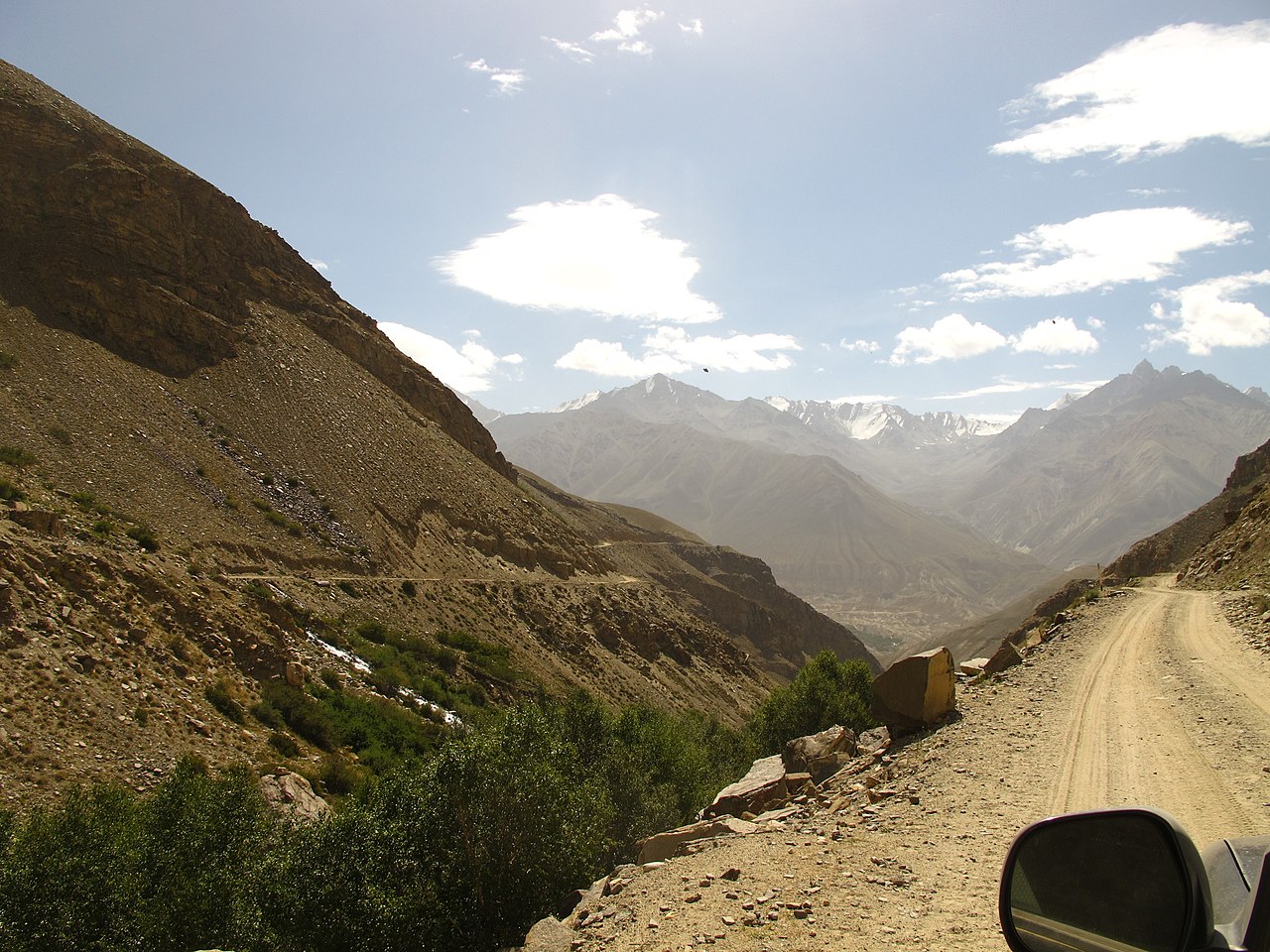
- Pamir highway, Wakhan valley. Source- Papouten, CC BY-SA 4.0, via Wikimedia Commons
5. A Taste of the Silk Road
Tajik cuisine is soul-warming mountain food.
- Oshi Palav (Plov): The national dish. Rice, carrots, and onions are slow-cooked in a cast-iron kazan with tender chunks of mutton or beef. It is more than a meal; it’s a symbol of community and hospitality.
- Qurutob: Arguably the most unique dish in Central Asia. It consists of strips of flaky flatbread soaked in a sauce of salted yogurt balls (qurut), topped with fried onions and fresh herbs. It is traditionally eaten by hand from a large wooden bowl.
- Non (Flatbread): No meal is complete without Non. These round, stamped loaves are treated with immense respect; they are never placed upside down and are always torn by hand, never cut with a knife.
- Green Tea (Chay): The national drink. Whether you are in a high-altitude yurt or a city tea house (choikhona), you will be greeted with a bowl of hot green tea as a sign of welcome.
6. Essential Travel Logistics
- Visa: In 2026, many nationalities (including the USA, Canada, and EU) enjoy 30-day visa-free entry. If you plan to stay longer or enter the GBAO (Pamir) region, you must apply for an e-visa and a specific GBAO permit online before arrival.
- Currency: The official currency is the Tajik Somoni (TJS). While Dushanbe has ATMs, cash is king in the mountains. Ensure you carry enough Somoni for your entire Pamir journey.
- Best Time to Visit: June to September is the window for mountain travel. High passes like Ak-Baital can be blocked by snow outside of these months.
- Safety: Tajikistan is generally safe, but hikers should always travel with a guide or a satellite messenger in remote areas. Use your eSIM to keep your family updated on your coordinates.
Why Go Now?
Tajikistan is a destination for the traveler who wants to see the world as it was—raw, majestic, and deeply connected to its roots. It is a place where you can find yourself humbled by the scale of the mountains and warmed by the generosity of a shepherd’s smile. By securing your digital connection with an eSIM and bringing a spirit of adventure, you are ready to witness the spectacular "Roof of the World" for yourself.