
São Tomé and Príncipe: Africa’s Hidden Island Eden
Source: Britannica
Tucked away in the Gulf of Guinea, roughly 250 kilometers off the northwestern coast of Gabon, lies the two-island nation of São Tomé and Príncipe. Often referred to as the "Chocolate Islands," this archipelago is one of the world's most pristine and least-visited destinations. It is a land where the forest is reclaiming abandoned colonial mansions, where volcanic peaks pierce the mist, and where the rhythm of life follows the gentle philosophy of leve-leve (easy-easy).
For the traveler seeking a sanctuary that feels untouched by mass tourism, these islands offer an immersive journey into the heart of the Atlantic.
1. The Landmarks: From Needle Peaks to Blue Lagoons
The geography of the islands is defined by ancient volcanic activity, creating dramatic skylines and secluded coves.
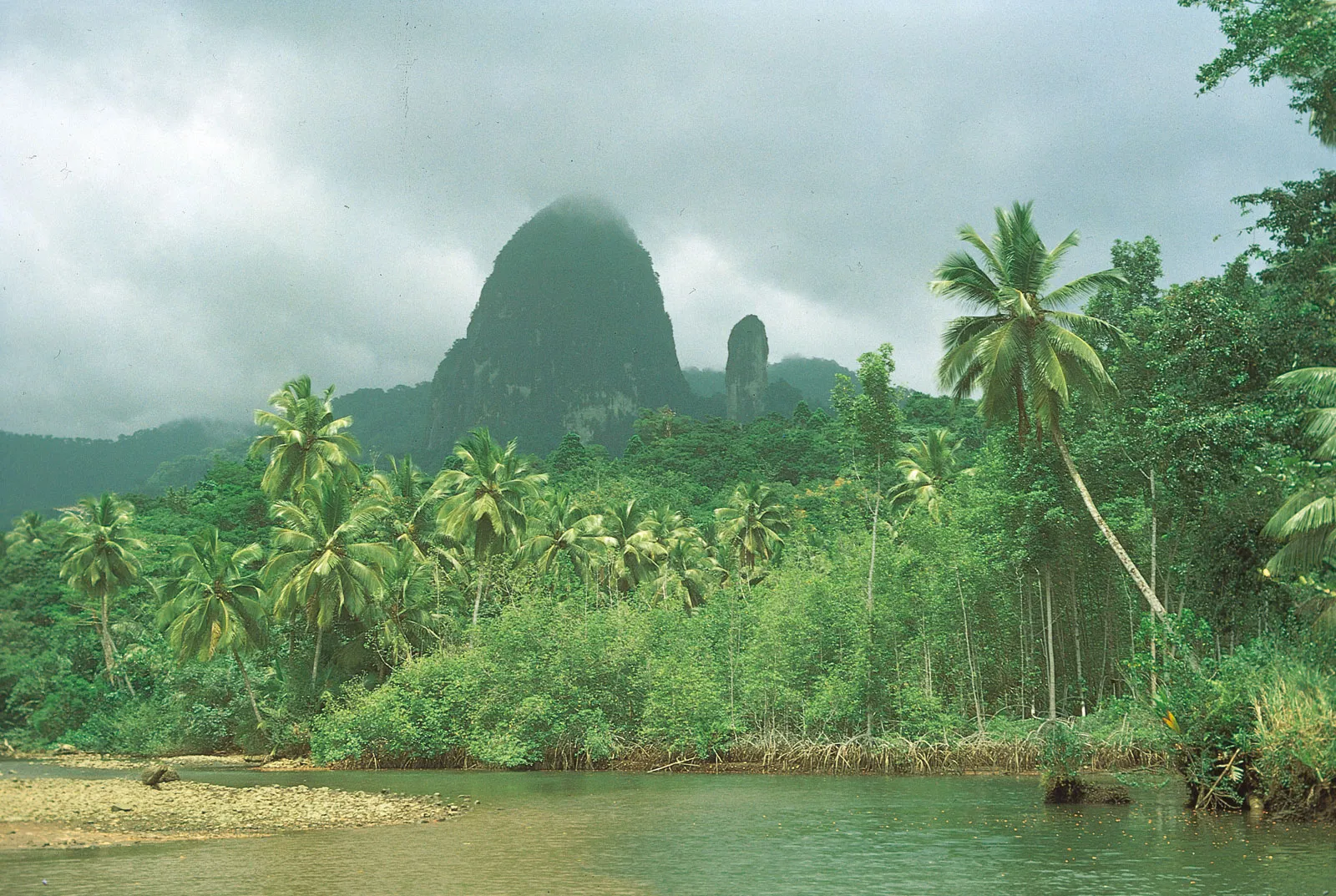
- Pico Cão Grande (The Great Dog Peak): This is the most iconic sight in the country. It is a needle-shaped volcanic plug that rises 663 meters abruptly from the surrounding rainforest in southern São Tomé. Seeing its silhouette emerge from the morning mist is a bucket-list moment for any nature enthusiast.
- Boca do Inferno (Hell’s Mouth): Located on the eastern coast of São Tomé, this natural rock formation forces seawater through a narrow channel, resulting in a spectacular geyser-like spray that shoots high into the air.
- Lagoa Azul (Blue Lagoon): A tranquil spot in the north known for its turquoise waters and baobab-lined shores. It is an ideal location for a quiet afternoon of snorkeling among vibrant coral reefs.
- Bay of Spires: On the smaller island of Príncipe, a boat tour of the Bay of Spires reveals a series of jagged volcanic towers rising from the ocean, a sight often described as a scene from a prehistoric epic.
 Source- By David Stanley from Nanaimo, Canada - Igreja Nossa Senhora da Conceicao, CC BY 2.0
2. The Digital Compass: Navigating with an eSIM
While the islands are the perfect place to disconnect from stress, staying connected to the world is a vital logistical tool. The infrastructure is developing rapidly, and having reliable data is essential for a smooth journey.
The Logistics Challenge Much of the islands' beauty is found down unpaved tracks and hidden forest paths. Reliable GPS is a safety necessity for finding remote roças (plantations) or secluded beaches like Praia Banana. Furthermore, since many guest houses and eco-lodges are in isolated areas, being able to coordinate with local guides and drivers through messaging apps is the standard for travel.
The Seamless Solution The most efficient way to maintain your independence is to secure a mobile data plan via an eSIM before you arrive. An eSIM bypasses the traditional paperwork of finding a physical SIM card shop in the capital, allowing you to activate your connection instantly upon arrival. This ensures you aren't reliant on intermittent Wi-Fi and allows you to check weather alerts, use translation tools, and maintain a secure line of communication throughout your expedition.
3. The Heritage: The Legacy of Cocoa
History in São Tomé and Príncipe is intimately tied to the land. For a time, these islands were the world's largest producers of cocoa, and the remnants of this era provide a fascinating backdrop for exploration.
- The Roças: These historic plantations, such as Roça Agostinho Neto and Roça Belo Monte, are architectural marvels. Some have been beautifully restored into boutique hotels, while others are slowly being overtaken by the jungle, creating a hauntingly beautiful atmosphere.
- Chocolate Labs: Visit a local chocolate artisan to see the transformation of the "fine flavor" cocoa bean into world-class chocolate. The rich volcanic soil gives the local cocoa a distinct, earthy profile that is prized by connoisseurs globally.
Monument in Sao Tome. Source- Husond, Wikimedia Commons
4. A Taste of the Islands
The cuisine of the islands is a flavorful blend of African and Portuguese influences, centered on the fresh bounty of the Atlantic and the fertile soil.
- Fish Calulu: The national dish. A hearty, slow-cooked stew made with fresh or dried fish, okra, spinach, eggplant, and palm oil. It is typically served with a starchy side like funge or rice.
- Santola (Spider Crab): A specialty in the town of Neves. Huge crabs are served simply—boiled and presented with a wooden board and hammer to crack the shells.
- Arroz Doce: A comforting sweet rice pudding flavored with local spices like cinnamon and vanilla, often served as a celebratory dessert.
- Grilled Seafood: From red snapper to octopus, the daily catch is often grilled over charcoal at roadside stalls, offering the most authentic taste of island life.
5. Essential Travel Logistics
- Getting There: Most international travelers arrive via flights from Lisbon or West African hubs. It is essential to check if you need a visa or an Entry Authorization based on your nationality.
- Currency: The official currency is the Dobra (STN). While some large hotels accept cards, cash is absolutely essential for markets, taxis, and local restaurants. It is advisable to bring Euros or US Dollars to exchange in the capital.
- Health: Ensure you have your Yellow Fever vaccination card and consult with a professional regarding malaria prophylaxis, as the islands are a tropical environment.
- Etiquette: The islands follow the philosophy of Leve-Leve. Patience is key—things may move slower than you are used to, but that is part of the charm. A friendly "Bom dia" (Good morning) goes a long way with the locals.
Why Visit Now?
São Tomé and Príncipe is a destination that asks you to be a guest rather than just a tourist. It is a place of deep green forests, turquoise waters, and a quiet, respectful pride. By securing your digital connection with an eSIM and arriving with a spirit of respectful curiosity, you can witness the spectacular, unvarnished beauty of Africa’s "Lost Eden."